
Center for Health Promotion and Prevention Research
News Post
Published: September 15, 2026
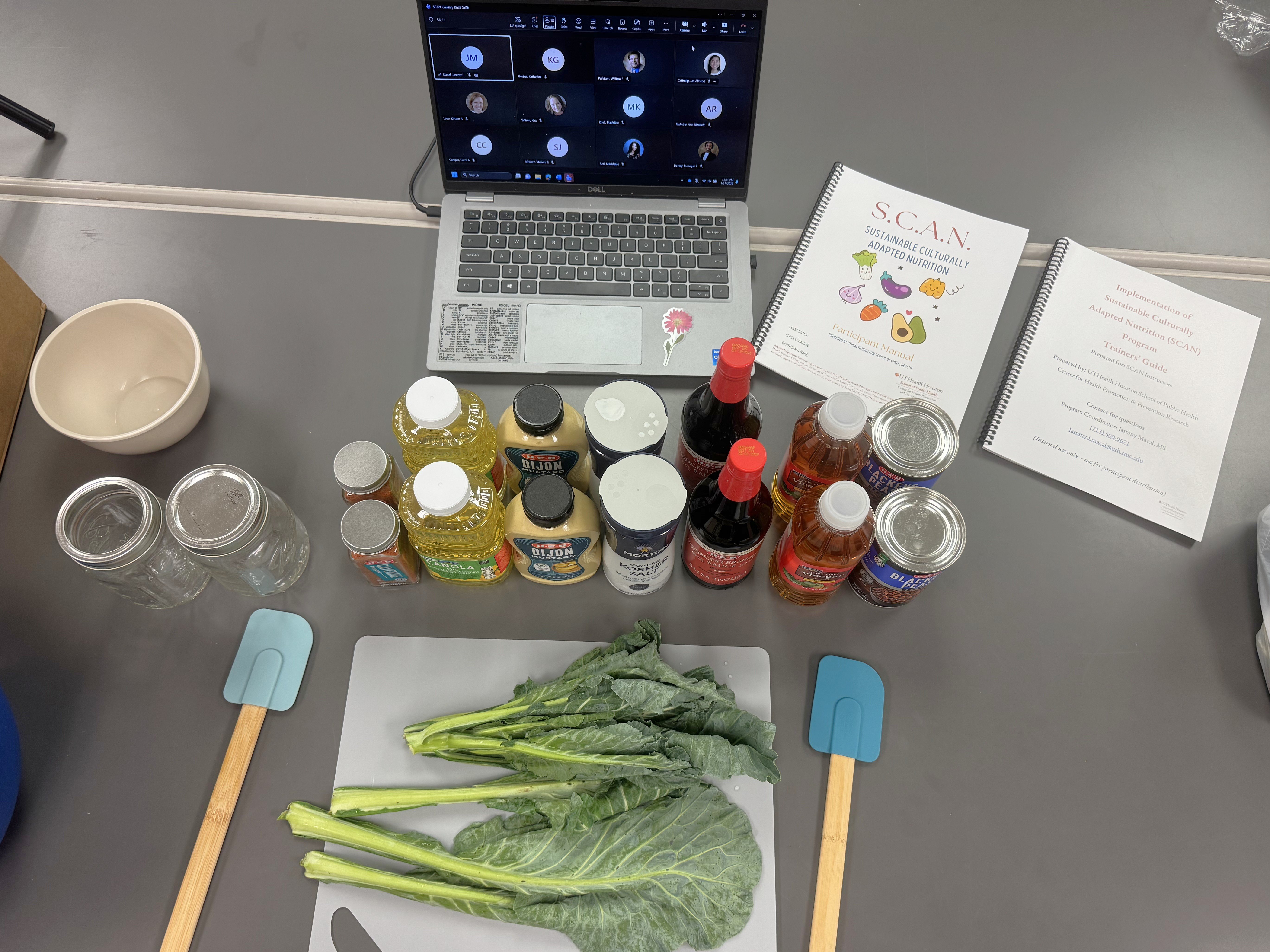
SCAN (Sustainable Culturally Adaptive Nutrition), a successful UTHealth Houston Center for Health Promotion and Prevention Research (CHPPR) program that helped people with pre-diabetes make lasting lifestyle changes, has now been expanded to support individuals already living with diabetes. The updated program is being tested at clinics throughout Houston, Texas.
The SCAN program was originally developed as part of the Texas Department of State Health Services (DSHS)-funded Diabetes Prevention and Control Grant Program at CHPPR to enhance the National Diabetes Prevention Program (DPP). The program includes four hands-on cooking classes that teach healthy cooking techniques applicable to a wide range of cuisines from around the world.
In addition, SCAN instructors are trained in Motivational Interviewing, an evidence-based counseling approach that helps participants build confidence and strengthen their ability to adopt and sustain healthy dietary habits. Together, these strategies support participants in reducing their risk of developing type 2 diabetes. Instructors can then work with a dietician to develop updated versions of patients’ favorite recipes that preserve the essence of the food while being healthier for people living with diabetes. Previous studies have shown that SCAN increases retention of participants diagnosed with pre-diabetes, and that these patients experienced better outcomes than patients who only used the DPP.
For this new pilot study, the research team has integrated SCAN with the national Diabetes Self-Management Education and Support (DSMES) program in order to support patients already living with diabetes. By applying a comprehensive food curriculum to the DSMES, researchers aim to help participants shift their food and diet behaviors and outlook in order to make sustainable, long-term changes.
The new study involves significantly more participants than previous iterations, with the SCAN program being implemented at multiple clinic sites around Houston, Texas. The team has partnered with UT Physicians to utilize the program in five clinics across the Greater Houston Area, as well as Lifestyle Medicine Clinic in Katy.
Researchers have also refined the motivational interviewing component of the program, in which instructors discuss foods and recipes that hold personal significance for patients.
Early feedback from instructors and participants has been positive. The research team is already considering future enhancements of the SCAN program, such as technology-based tools for meal planning and recipe development, additional components to encourage physical activity, and strategies tailored to rural communities where access to healthy foods and exercise resources may be limited.
“We’re also looking how we can improve the efficacy of both of these programs by introducing innovations like SCAN that make more people want to attend and improve their retention of what they learn” on said William “Brett” Perkison, MD, MPH, FACOEM, a Principal Investigator on the project. “We’re also trying show improvement in health outcomes that would demonstrate to public and private insurers that coverage for these additional services is will help prevent increased medical costs in the future.”
To learn more about the original iteration of the SCAN Program, you can read the research team’s recent publication “Outcomes of the Sustainable Culturally Adapted Nutrition Program (SCAN) and food supplement program to improve engagement with the National Diabetes Prevention Program (NDPP)” in Frontiers in Clinical Diabetes and Healthcare.