
Tsai Receives $1.1 Million Grant to Expand Laundromat-Based Health Clinics in San Antonio and Bexar County
Data shows laundromat clinics are effective at reaching populations with high rates of disease and low access to healthcare
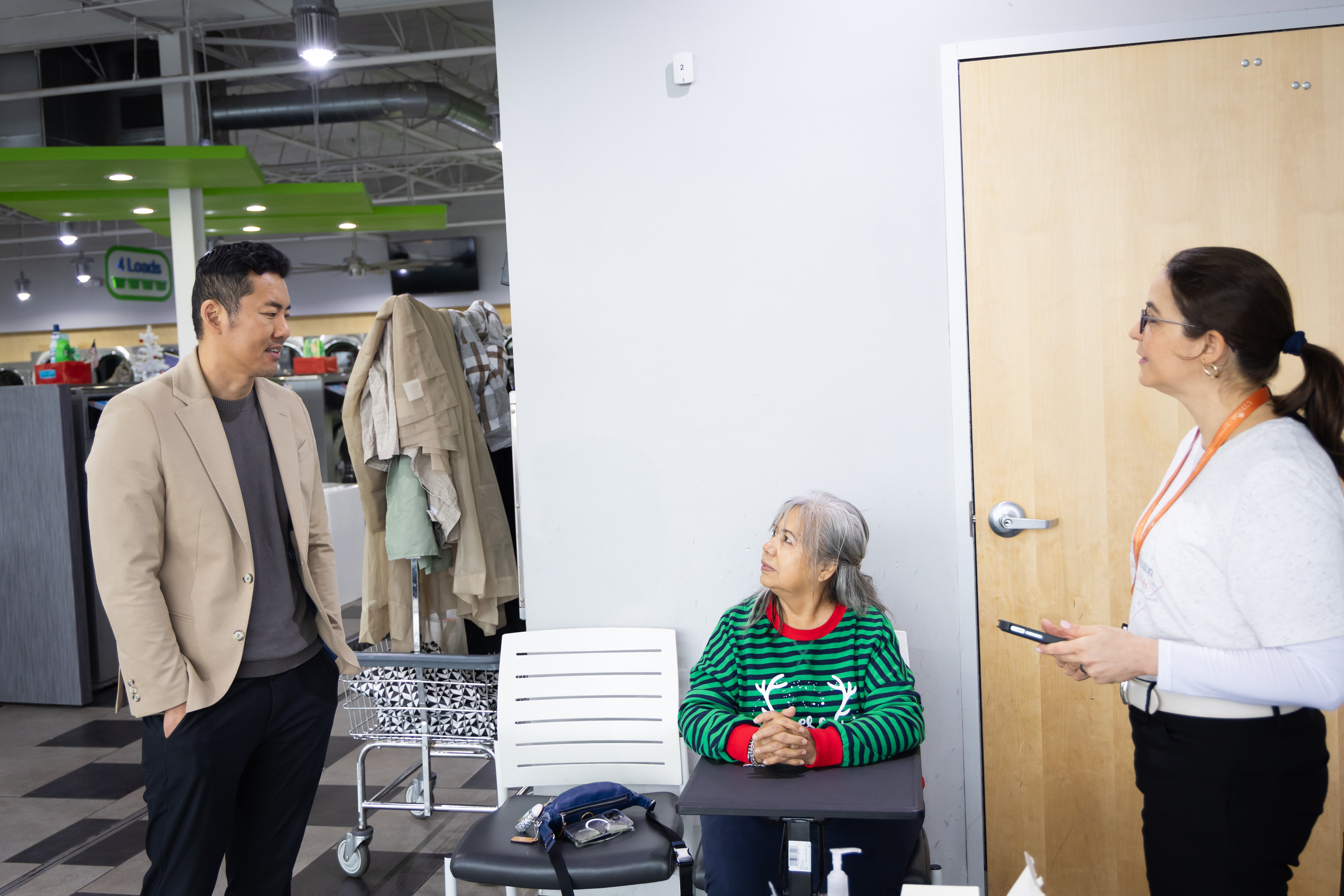
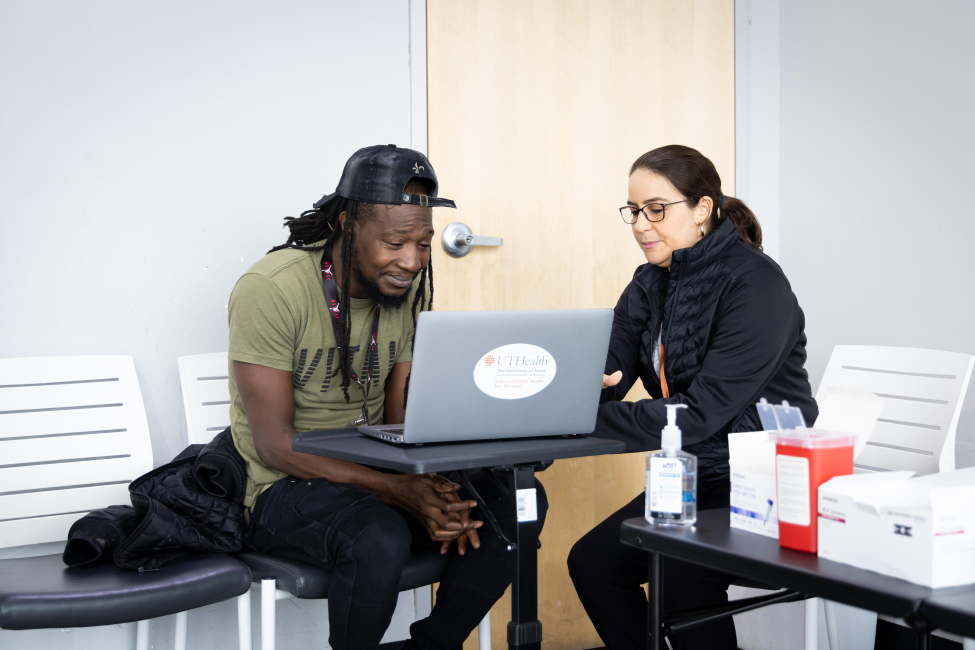
After running a small pilot program for the past two years providing health care in laundromats, Jack Tsai, PhD, professor and regional dean of UTHealth Houston School of Public Health in San Antonio, has secured a new $1.1 million grant to continue and expand the program for the next three years.
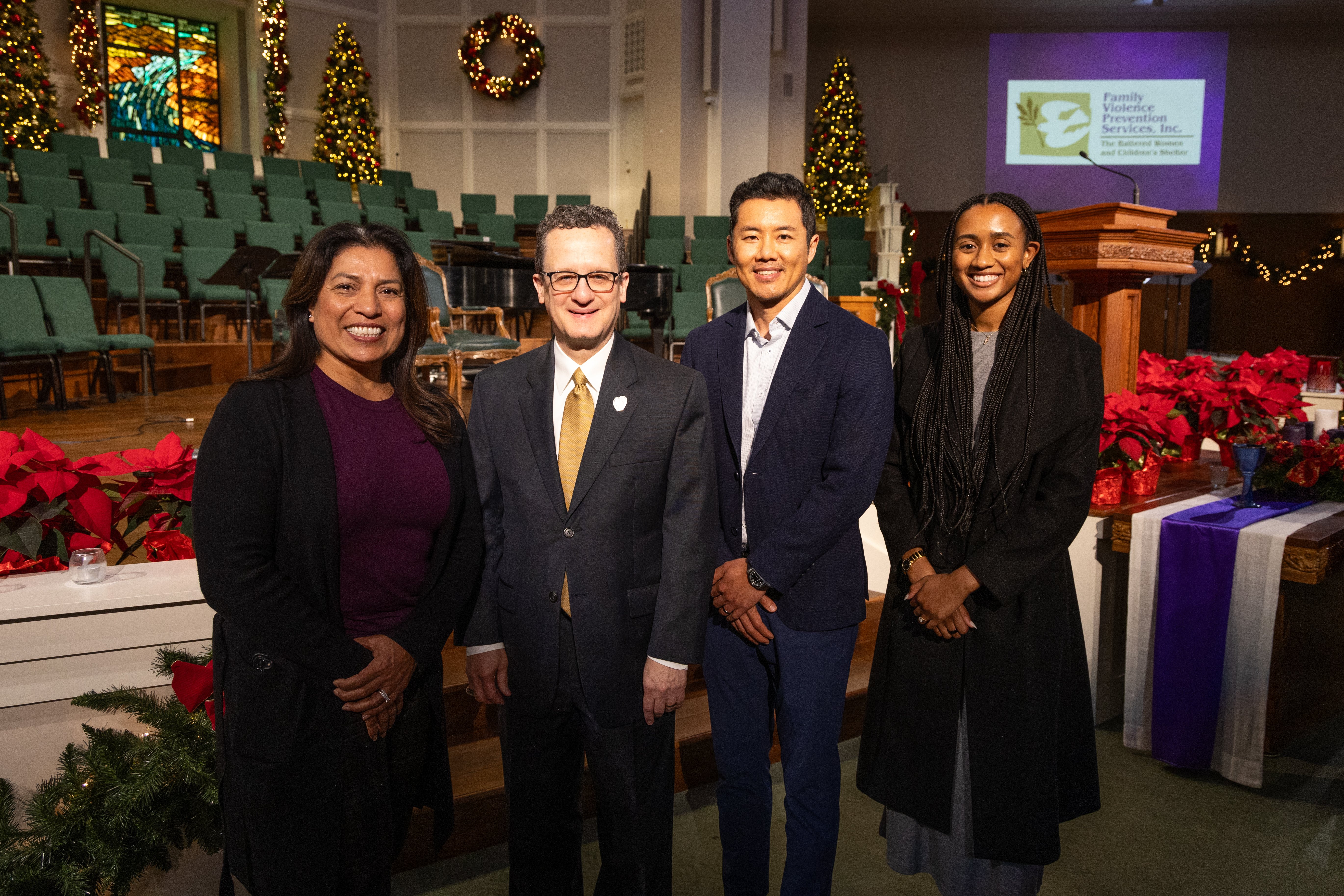
The Baptist Health Foundation of San Antonio awarded the grant to UTHealth Houston School of Public Health during a highly competitive year for health care funding, with Tsai’s grant proposal beating out multiple applications from other Tier One institutions.
For the past few years, the program, named SPIN (Supporting Prevention In Neighborhoods), has been led by Tsai with the assistance graduate students who set up pop-up clinics at different laundromats throughout San Antonio, offering blood pressure screening, A1C hemoglobin testing for diabetes, and mental health screening. Results of the screening for all tests are returned to participants within minutes so they can know right away if they are at risk.
Those who tested positive for high blood pressure, high blood sugar or potential mental health disorders were referred to local low-cost or free healthcare resources available in San Antonio.
The new iteration of the project will operate much the same way, but the new grant will allow the program to expand education, referrals, and connections to support continuation of care. Clients will now get a warm handoff to services at University Health, the largest safety-net health care provider in San Antonio and a key partner on the project. In coordination with the School of Public Health team, University Health providers will follow up on clients’ test results and connect them to health care services and health insurance for the uninsured.
“So far we’ve mostly just been doing the screening of health conditions,” Tsai said. “This expansion will really help us develop health education for participants and implement proper referral processes for folks to receive care.”
Last year Tsai, along with co-investigators Vanessa Schick, PhD, and Nick McCann, MPH, published a study based on data from the pilot project that showed participants from the laundromat clinics had rates of hypertension roughly twice as high as the population of Bexar County. The participants also had slightly higher rates of diabetes than the rest of the population, data that convinced Tsai that laundromats can be an effective place for reaching groups in need of health care access.
“And I think, importantly, we included in the survey the question ‘Are people comfortable being approached in laundromats?’” Tsai said. “And we found that many people were open to receiving interventions and health screenings at laundromats. That really gave us further motivation to continue the project.”
The project will also be expanding the clinics from just a few laundromats in the city to 16 laundromats all across Bexar County that will be offering health screenings several times a week.
The idea for the laundromat clinic model came to Tsai when he and Schick were brainstorming methods for reaching populations who most need health care at critical times and in key places. Tsai was also informed by his personal experiences and years of working with vulnerable populations.
“I’ve been a clinician for homeless veterans for many years, and in homeless outreach what often really works is serving people where they are in order to engage people in health care,” Tsai said. “We go to where the homeless folks are, whether it’s shelters or soup kitchens or sometimes on the streets.”
A preliminary study by Tsai and Schick published in 2022 on the demographics of laundromat users confirmed that many laundromat users are lower income and face significant barriers to accessing traditional health care. That early data collection revealed that more than half of the laundromat users surveyed were living at poverty level and did not have health insurance coverage.
According to the study, laundromat users were also significantly more likely to report poor health and physical impairment compared to county and state population estimates, and were less likely to have a primary care provider, to have received a routine medical checkup in the past year, and to have been tested for HIV. In that sample, 78%of respondents also expressed interest in receiving health care services on-site at laundromats.
“I used to live near a laundromat, and I always found there were people kind of milling outside,” Tsai said. “That’s a good time to kind of connect with them because they have idle time. They’re waiting. That really is an ideal situation where you can intervene and engage some of these folks.”
Angela Potes Duran, an MPH student in San Antonio, has been running the clinics for several months and said she has seen firsthand the impact of the clinics and how she has been able to help people.
“Some people don’t have medical insurance or haven’t visited a health care provider, and they appreciate that we are here,” Potes Duran said. “I love being a part of this project because Dr. Tsai and the team always support me, I can help people and I've learned a lot about community projects.”
To date, the project has served approximately 300 individuals through laundromat-based outreach in Bexar County. With this new grant from the Baptist Health Foundation, the team is planning to dramatically expand that reach.
“We’re hoping to reach thousands this time,” Tsai said. “We’re grateful for the Baptist Health Foundation’s support for this project and really excited about it.”