
UTHealth Houston Celebrates Grand Opening of New Starr County Border Health Research Facility
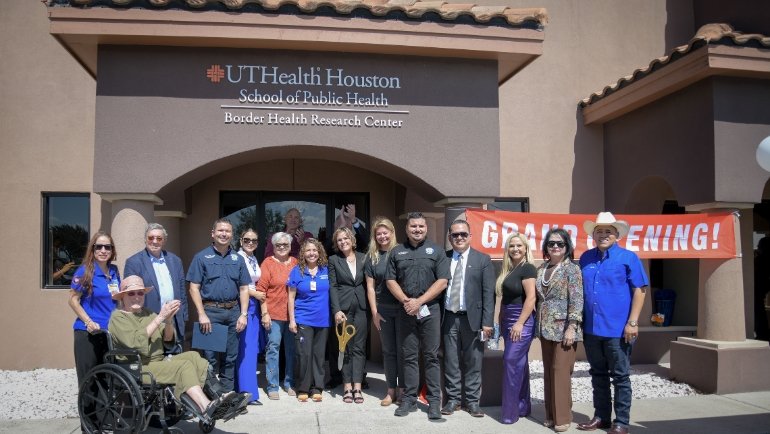
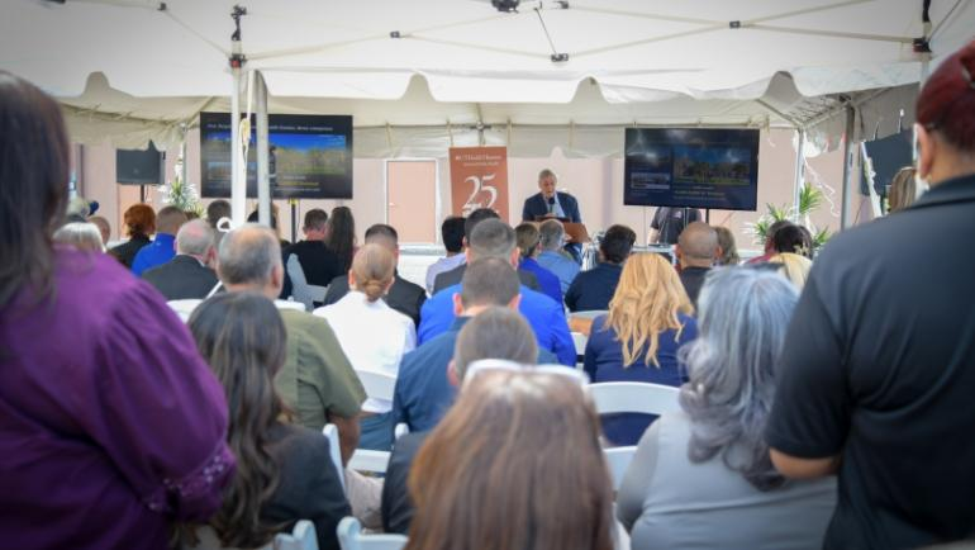
RIO GRANDE CITY, Texas — UTHealth Houston School of Public Health in Rio Grande City, in partnership with the Center for Clinical and Translational Sciences (CCTS) and the Border Health Research Cohort, officially inaugurated its new state-of-the-art facility on Thursday, Oct. 15, 2026.
Located at 2542 Central Palm Dr., Ste. 202, the new facility marks a major milestone in a four-decade-long commitment to improving public health along the Texas-Mexico border. The ribbon-cutting celebration brought together institutional leaders, researchers, healthcare providers, and community members.
A Legacy Rooted in Community Trust
The story of UTHealth Houston’s presence in Starr County began over 45 years ago. In the early 1980s, pioneering researchers like Craig Hanis, PhD, established a clinic by purchasing lumber from a local yard and bringing tools down from Houston to build interview stations and laboratory benches. Over time, early conversations with local leaders like Mario Ramírez, MD, a Roma physician and UT Regent, helped direct research toward the community's most pressing challenge: diabetes.
What began as modest weekend clinic visits on Britton Street evolved into the longest-running, largest collection of chronic disease data for any single Hispanic population.
Key historical impacts and achievements over the last four decades include:
- Massive community reach, with over 35,000 examinations conducted and more than 100,000 health screenings completed.
- Substantial research funding, generating over $100 million in research grants across collaborating institutions.
- A groundbreaking cohort, securing long-term follow-up with thousands of adults and children alongside over 150,000 bio-specimens that serve as an invaluable resource for global genetic, metabolic, and infectious disease research.
- Culturally tailored care, featuring pioneering culturally sensitive diabetes education programs published in the late 1990s and innovative community-based interventions.
“The greatest achievement cannot be captured in numbers; it is really the trust that has been forged between our staff and the community of Starr County,” shared Eric Boerwinkle, PhD, dean of the School of Public Health, during the opening remarks. “This new building is more than a facility, it’s a renewal of a promise made 45 years ago to stay, listen, and contribute.”
Advancing Healthcare for Future Generations
The launch of the Rio Grande City Clinical Research Unit (CRU) unifies decades of research from Starr County and Cameron County under the umbrella of the Border Health Research Center.
Led by incoming leaders Kari North, PhD, and Piper Below, PhD, alongside foundational leaders Joe McCormick, MD, and Susan Fisher-Hoch, MD, the center uses advanced multi-omic approaches (genetics, microbiome, proteins, and metabolomics) to address chronic health conditions affecting the region.
Key priorities for the new facility include:
- Cardiometabolic and liver health, deepening the understanding of diabetes, heart disease, metabolic liver disease, and bone health using advanced DXA scanning technology.
- The impact of cardiometabolic health on cognition and dementia, a growing problem in the community.
- Childhood and adolescent health, addressing early data indicating that children as young as age 2 face cardiometabolic risks, such as impaired glucose tolerance and hypertension. The center is expanding studies and intervention programs aimed at stopping the progression of cardiometabolic disease early in life.
- Community-centric interventions, translating observational research into actionable public health programs, including lifestyle interventions for adolescents and family-centered health education.
Honoring the Past, Looking to the Future
The grand opening featured remarks from UTHealth Houston leadership, including Boerwinkle and David McPherson, MD, vice president, Clinical and Translational Sciences, alongside dedicated clinical staff who have served Starr County residents for over 20 years. The event stood as a heartfelt tribute to the researchers, local healthcare workers, and community families whose trust and participation have made this world-class research possible.