











Grants include millions for recruitment, prevention services, and product development.
Published: May 21, 2025
Link to article: https://www.cprit.texas.gov/news-events/articles/cprit-awards-more-than-93-million-for-cancer-research-and-prevention/
CANCER POPULATION HEALTH
Cancer population health focuses on understanding and improving health outcomes – including prevention, control, equitable access to treatment, and reducing disparities – at the community and group levels. Cancer affects everyone, but some communities face a heavier burden due to socioeconomic challenges, environmental risks, limited healthcare access, and geographic barriers.
THE CORE FACILITY
The Texas Spatial-Temporal Data Science, Informatics, and Modeling Core Facility (TEX-SIM) works to address these challenges by providing advanced data analytical tools and informatics tailored to the diverse needs of communities across Texas. TEX-SIM integrates data on environmental exposures, georeferenced health information, and healthcare access metrics to uncover how these factors influence cancer risk, treatment, and outcomes for all types of cancer. TEX-SIM focuses on cancers that disproportionately affect disadvantaged communities, identifying their unique characteristics and needs. Unlike traditional approaches centered on individual patients, TEX-SIM emphasizes community-level health trends by developing customized community profiles that offer actionable insights to reduce disparities, promote equity, and encourage pride in our Texas communities. TEX-SIM supports evidence-based decision-making by providing the data infrastructure, analytics, and visualization tools needed to enable researchers to identify high-risk populations, design targeted interventions, expand data availability, and effectively reduce cancer disparities (Fig. 1).
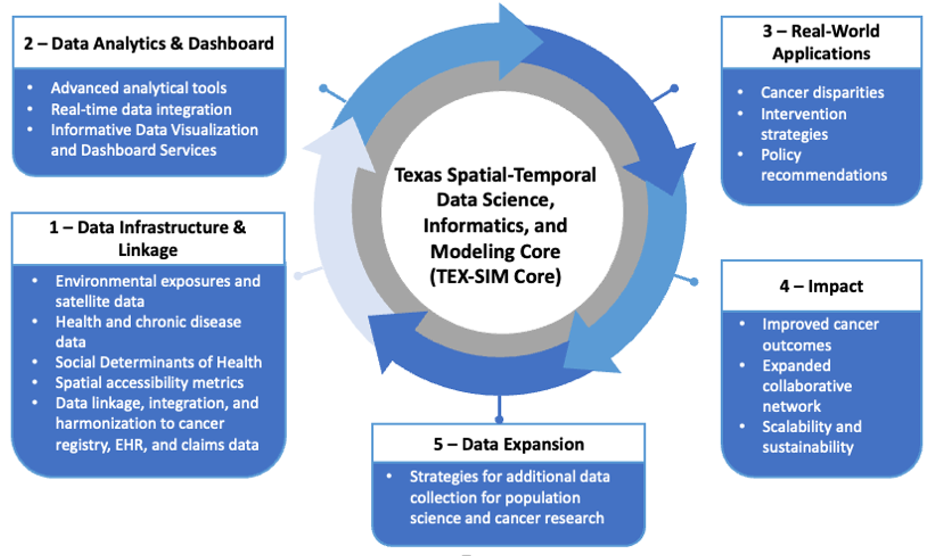
Figure 1. TEX-SIM workflow to advance population-focused cancer research.
OVERALL GOALS OF THE CORE FACILITY
TEX-SIM is an innovative initiative to transform cancer population health research, promote health equity, and support CPRIT’s mission to reduce the cancer burden in Texas. By leveraging cutting-edge spatial-temporal data science and informatics, TEX-SIM addresses the complex interplay of social determinants of health (SDoH), environmental, and geographic factors that contribute to cancer disparities. TEX-SIM provides essential and tailored tools, resources, and support to researchers, institutions, and communities statewide, supporting data-driven strategies to reduce disparities and improve cancer outcomes across Texas communities. By leveraging UTHealth Houston’s institutional infrastructure and community engagement, TEX-SIM will effectively disseminate resources and contribute to actionable interventions.
SPECIFIC AIMS
Aim 1: Develop the TEX-SIM infrastructure – a state-of-the-art data and computing platform – for spatial-temporal data science and geospatially linked informatics to support cancer population health research and implementation. TEX-SIM will provide a robust, scalable platform that integrates diverse, spatial-temporal datasets with geospatial informatics and advanced analytical tools for sophisticated analytical and predictive modeling.
Aim 2: Deliver comprehensive spatial-temporal data, advanced analytics, and visualization services leveraging the novel infrastructure and methodology expertise to support cancer research initiatives across Texas. TEX-SIM will deliver harmonized datasets, interactive dashboards, and cutting-edge modeling tools to identify high-risk populations, understand cancer disparities, and design targeted prevention and treatment strategies.
Aim 3: Establish TEX-SIM as the central hub for spatial-temporal data science and informatics locally, state-wide, and nationally in cancer population health. TEX-SIM aims to foster collaboration, offer training, and host workshops to advance research, promote precision prevention, and to improve health outcomes across diverse populations.
EXPERTISE
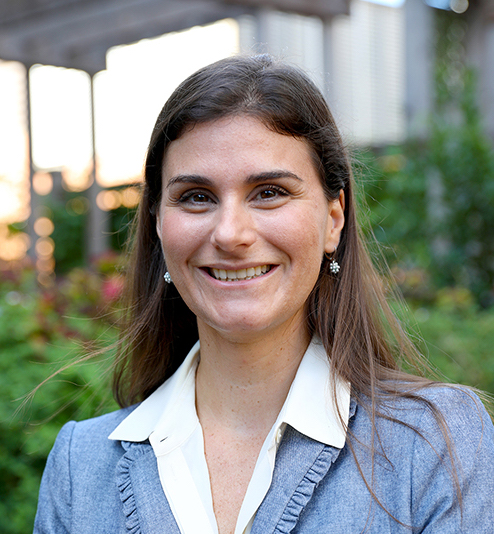
TEX-SIM will offer specialized services to the cancer research community, focusing on spatial-temporal data, advanced analytics, visualizations (including interactive dashboards), and tailored applications. TEX-SIM is directed and managed by Dr. Cici Bauer, Associate Professor at the School of Public Health and the Director (and founder) of the Center for Spatial-Temporal Modeling for Applications in Population Sciences (CSMAPS) at UTHealth. TEX-SIM further leverages the expertise of a wide diversity of experienced faculty housed within one of TEX-SIM’s three major cores:
For more details on our faculty members’ specific expertise, please see the TEAM tab.
Spatial-Temporal Data Science Core |
Clinical Informatics Core |
Cancer Population Epidemiology Core |
TEX-SIM provides specialized population-health data science services to advance cancer research through bioinformatics and data linkage, spatial-temporal data management and modeling, population epidemiology and study design, and visualization, including dashboard development and deployment. A list of our service offerings is provided below.
All data linkage will be conducted in a professionally curated, HIPAA-compliant environment to ensure data security and integrity
For interest and/or service inquiries, please complete our TEX-SIM: Intake Survey Form.
For all other inquiries, please contact:
Jessica Ross, BS
Project Manager
713-500-9409
[email protected]
Porsha V. Day, MPA
CSMAPS Center Administrator
713-500-9452
[email protected]
InsightTX 1.0: Texas Cancer Burden and Risk Insights Dashboard:
Dashboard link: https://spatiotemporal-data-science.shinyapps.io/InsightTX/
InsightTX dashboard exemplifies the Texas Spatial-Temporal Data Science, Informatics, and Modeling Core Facility (TEX-SIM) mission in providing advanced spatial-temporal data sources, visualization and analysis tools that address cancer-related population health challenges across the geographic regions in Texas.
InsightTX 1.0 features a wide range of cancer outcomes in Texas, along with contributing factors such as social determinants of health, environmental exposures, and access to care. For example, the dashboard currently includes cancer screening rates and integrates county-level colorectal, breast, and cervical cancer screening data from CDC PLACES (2018–2022). Geographic patterns and temporal trends are visualized through interactive maps, and users can compare any county to statewide averages, with census tract-level views available for major metropolitan areas, including Dallas, Houston, El Paso, and Abilene. The dashboard also maps social drivers of health, environmental exposures, spatial access to care, chronic disease burden, and lifestyle behaviors linked to cancer risk. Advanced search features allow queries by county or specific address, enabling researchers, public health agencies, and community organizations to make data-informed decisions about resource allocation and intervention planning.
The Community Selection Design module operationalizes TEX-SIM’s approach for generating customized community profiles and prioritizing intervention areas. It currently pilots a data-driven method to identify census tracts for colorectal cancer screening among adults aged 45 and older, using percentile-based thresholds across three dimensions: cancer screening rates, the CDC/ATSDR Social Vulnerability Index, and a composite Risk Factor Index (obesity, diabetes, binge drinking, smoking, and physical inactivity). This module demonstrates how real-time analytics can guide community-based intervention planning.
InsightTX supports TEX-SIM’s mission to improve cancer prevention and control in Texas by providing actionable, place-based insights through real-time data visualization. As one of TEX-SIM’s public health insight tools, the dashboard will continue to expand by integrating additional data sources and advanced analytical features to strengthen statewide cancer research and improve cancer outcomes across Texas.
Grants include millions for recruitment, prevention services, and product development.
Published: May 21, 2025
Link to article: https://www.cprit.texas.gov/news-events/articles/cprit-awards-more-than-93-million-for-cancer-research-and-prevention/