
About CoLab
CoLab promotes mental health and substance use solutions through education, training opportunities, program development, and community-driven service. Led by four faculty members at UTHealth Houston School of Public Health’s Center for Health Promotion and Prevention Research (CHPPR), this research team envisions a world where individuals with substance use and mental health challenges enjoy fulfilling lives. We seek to accomplish our mission by promoting the following values:



Our Goals
 Advance evidence-based research methods and establish groundbreaking procedures and policies for medication-assisted therapy (MAT).
 Provide educational and training opportunities to expand available mental health resources and substance use peer support services.
 Design and implement programs that increase access to mental health and substance use treatment.
Projects
- The HOMES with HEART Initiative
The HOMES with HEART Initiative

The HOMES with HEART Initiative represents the collective work in MOUD-supportive recovery housing by researchers at UTHealth Houston School of Public Health, and it includes Project HOMES and HEART. Project HOMES is supported by Texas Targeted Opioid Response, a public health initiative operated by the Texas Health and Human Services Commission through federal funding from the Substance Abuse and Mental Health Services Administration grant award number HHS000563200001. HEART is supported by the Texas Opioid Abatement Fund Council.
- Enhanced Integrated Treatment Program with Sexual Health in Recovery (EITP-SHIR)
Enhanced Integrated Treatment Program with Sexual Health in Recovery(EITP-SHIR)

Sexual Health in Recovery (SHIR) is an evidence-based intervention for individuals at risk for HIV and drug use during risky sexual encounters. Funded by the Substance Abuse and Mental Health Services Administration (SAMHSA), SHIR focuses on increasing access to sexual health, substance use, and mental health treatment.
SHIR's Integrated Treatment Program (ITP) assesses health and shame related to sexual behaviors using a variety of tailored formats, including an intensive outpatient program, a supportive relapse-prevention outpatient program, and individual therapy and case management. For more information, contact our team.
- Behavioral Workforce Education and Training (BHWET) Program
Behavioral Workforce Education and Training (BHWET) Program

Funded by the Health Resources and Services Administration (HRSA), BHWET builds on the Opioid Workforce Expansion Program (OWEP) and works to expand the recovery support peer specialists (RSPS) workforce in Texas.
RSPS assists individuals with substance use disorders using medication-assisted treatment (MAT) while living in recovery residences. RSPS also provides training and support for people interested in becoming peer specialists, including educational classes, internships, and financial assistance (e.g., fees, tuition, and training). For more information, contact our team.
- Factors that Influence Emerging Adults’ Access to and Retention in Recovery Housing: An Exploratory Study
Factors that Influence Emerging Adults’ Access to and Retention in Recovery Housing: An Exploratory Study

Within the past year, an alarming number of emerging adults (ages 18-26) in the U.S. have met the criteria for a substance use disorder; many with a significant risk of death by overdose. Recovery housing is a promising source of support services for improving substance use health outcomes.
Dr. Kathryn Gallardo was competitively selected to be a JEAP Initiative trainee, receiving two years of mentoring and funding for a small pilot study to support an NIH grant application. This pilot study aims to advance knowledge of recovery support services by identifying influential factors in recovery housing access and retention in young adults. Learn more about JEAP Initiative pilot studies.
Publications
CoLab is the largest initiative in Texas evaluating recovery homes and impacting statewide policy to address opioid use disorder. Our cutting-edge research captures the social impact of MOUD-supportive recovery housing while impacting statewide policymaking.
Recent findings include:

Development and implementation of recovery housing policies and practices to support people taking medications for opioid use disorder (Journal of Substance Use and Addiction Treatment, 2026)

“Not in my backyard”: The impact of recovery residences on property values(Drug and Alcohol Dependence, 2026)

Resources
-
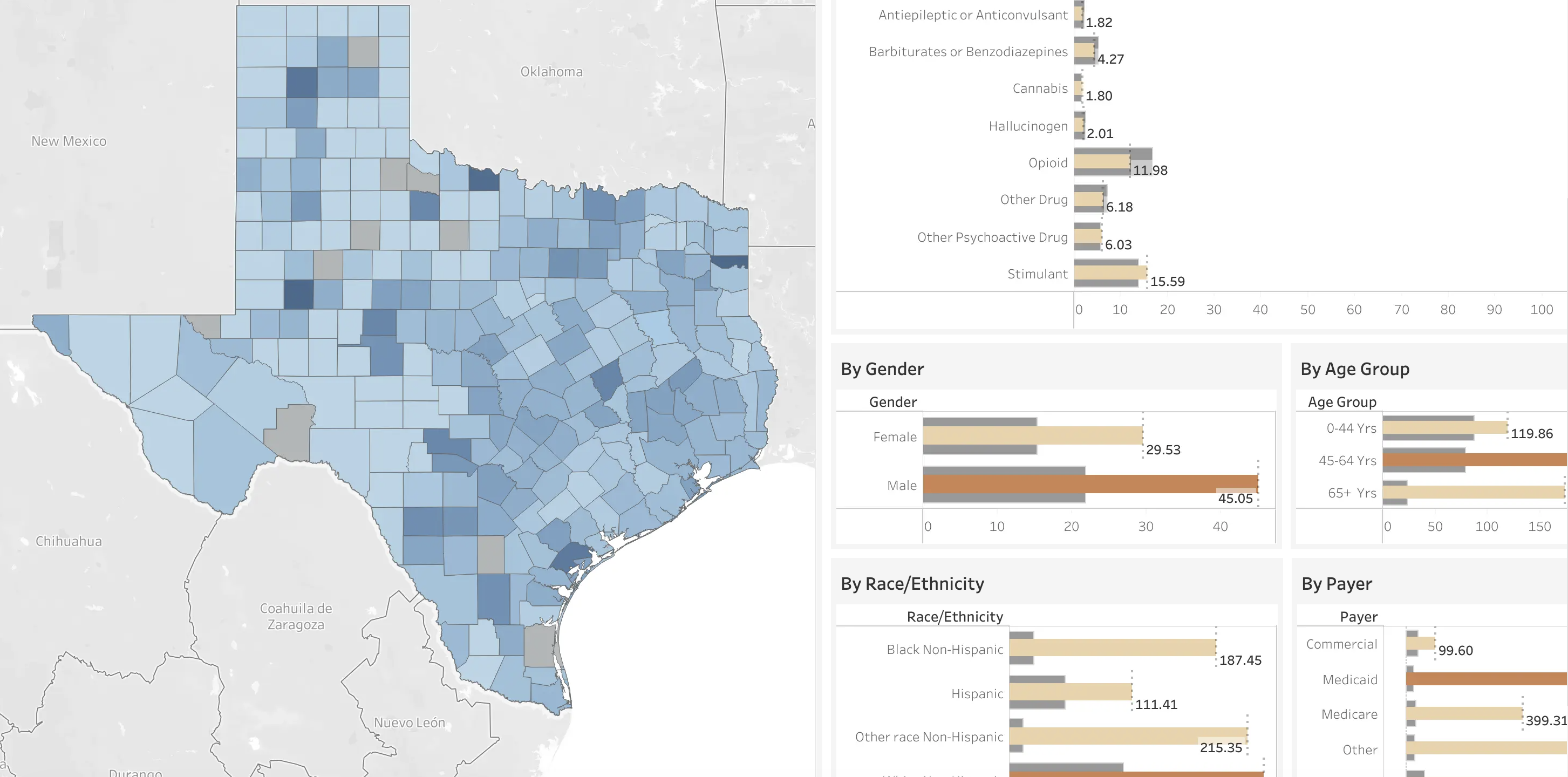
Texas Substance Use Hospitalization Dashboard
The Center for Health Care Datadeveloped an interactive dashboard to display healthcare utilization among people with substance use disorders (SUD) in Texas from 2018 to 2022.
News

Contact Us
Interested in learning more about our research, collaborating with us on a future project, or joining a passionate team dedicated to improving the lives of Texans? We want to hear from you!
[email protected] | 832-778-1597