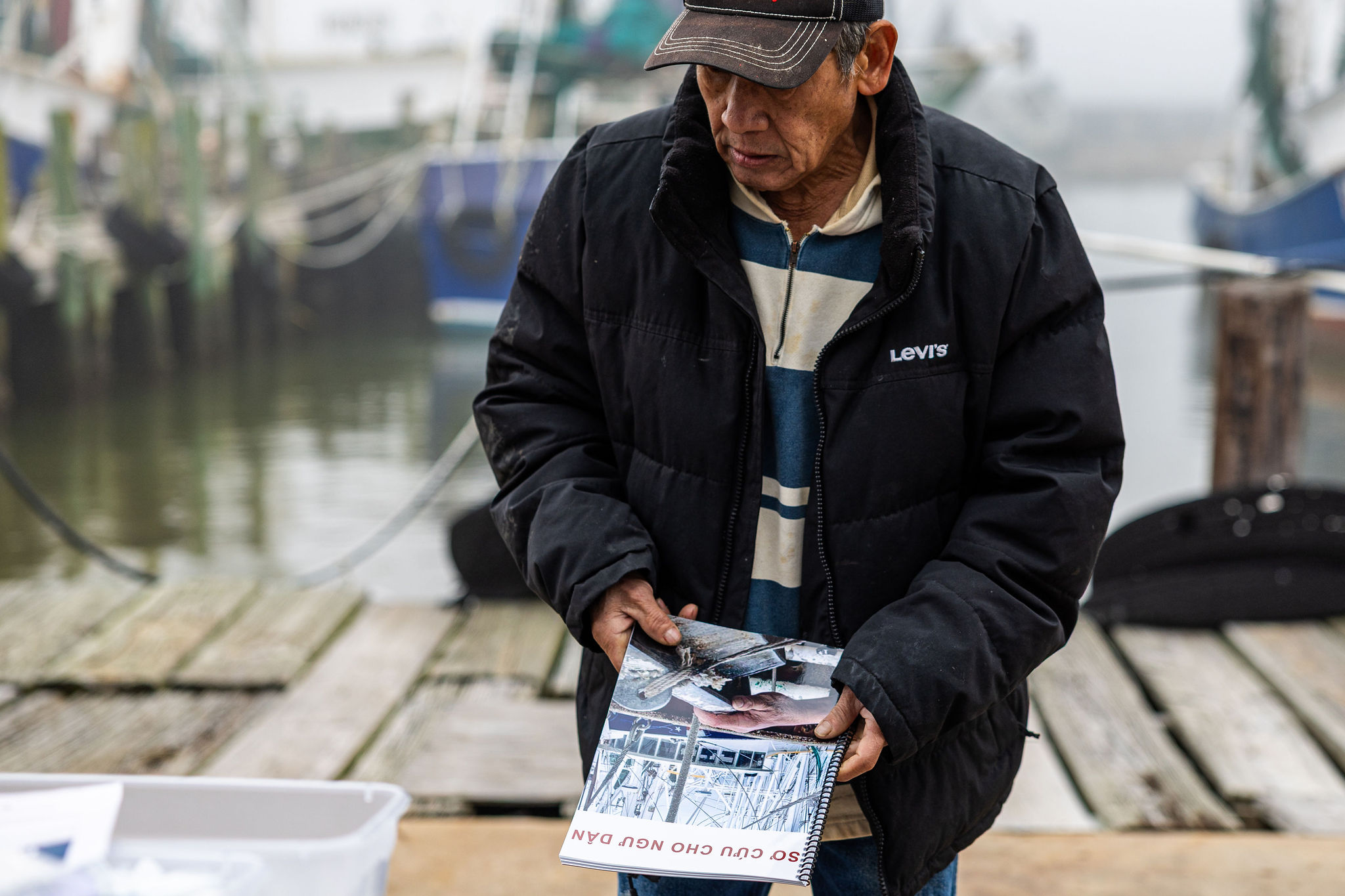
The Docside Clinic: Connecting Docs to Docks addresses health disparities that have been linked to precarious employment, such as a lack of sick leave, healthcare access, and substance misuse. Using a social-structural determinants of health lens and community-based participatory research methods, Dr. Guillot-Wright and her team developed, implemented, and continue to evaluate the Docside Clinic model. The Docside Clinic meets workers where they are by providing primary and behavioral healthcare services at fishing docks and ports, alongside social services, such as legal counseling, housing services, and food assistance. Since 2021, the Docside Clinic has completed more than 2,000 patient encounters and demonstrated feasibility in delivering longitudinal, community-based healthcare to an underreached and highly mobile workforce. Beginning in 2024, Community Health Workers (CHWs) have been successfully integrated into the Docside Clinic. Overall findings have demonstrated 1) successful continuity of care, including patient follow-up, medication refills, and lab services, 2) coordination of existing services, 3) improved healthcare engagement and medical adherence, 4) access to lifesaving procedures, such as heart surgery, and 5) increased use of legal services, SNAP and Medicaid benefits, and housing services.
Through CDC/NIOSH, US Coast Guard, THECB, and Humanities Texas funding, the Docside Clinic has expanded to four locations across the Gulf Coast and Caribbean, was featured on NPR’s Weekend Edition, produced a short documentary, and received two UT Innovation Awards. Additionally, the team regularly consults with organizations on how to implement the Docside Clinic model in their community and policymakers on how to implement evidence-informed policy solutions.
Clinical Services
Photo credit: Joseph Bui
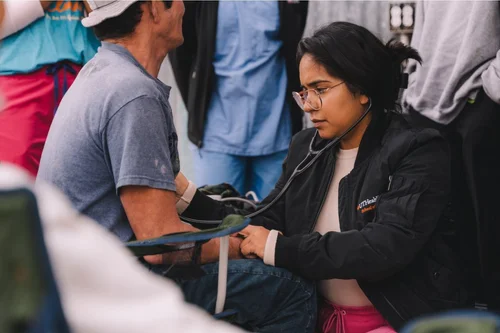
Primary Healthcare
We provide fishermen and other dockworkers with primary health care, including routine health checks, vaccinations, and prescription medicine.
Photo credit: Joseph Bui
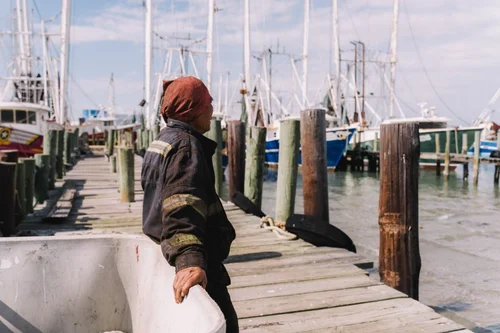
Behavioral Healthcare
We provide fishermen and other dockworkers with behavioral health care, including psychological and substance use services.
Photo credit: Carl Zach Photography
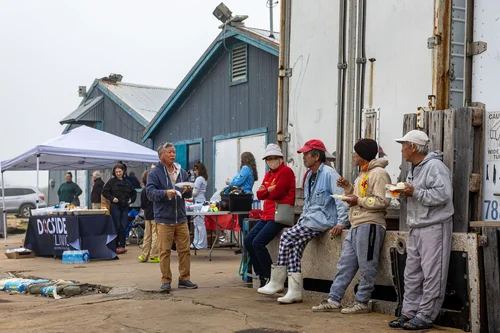
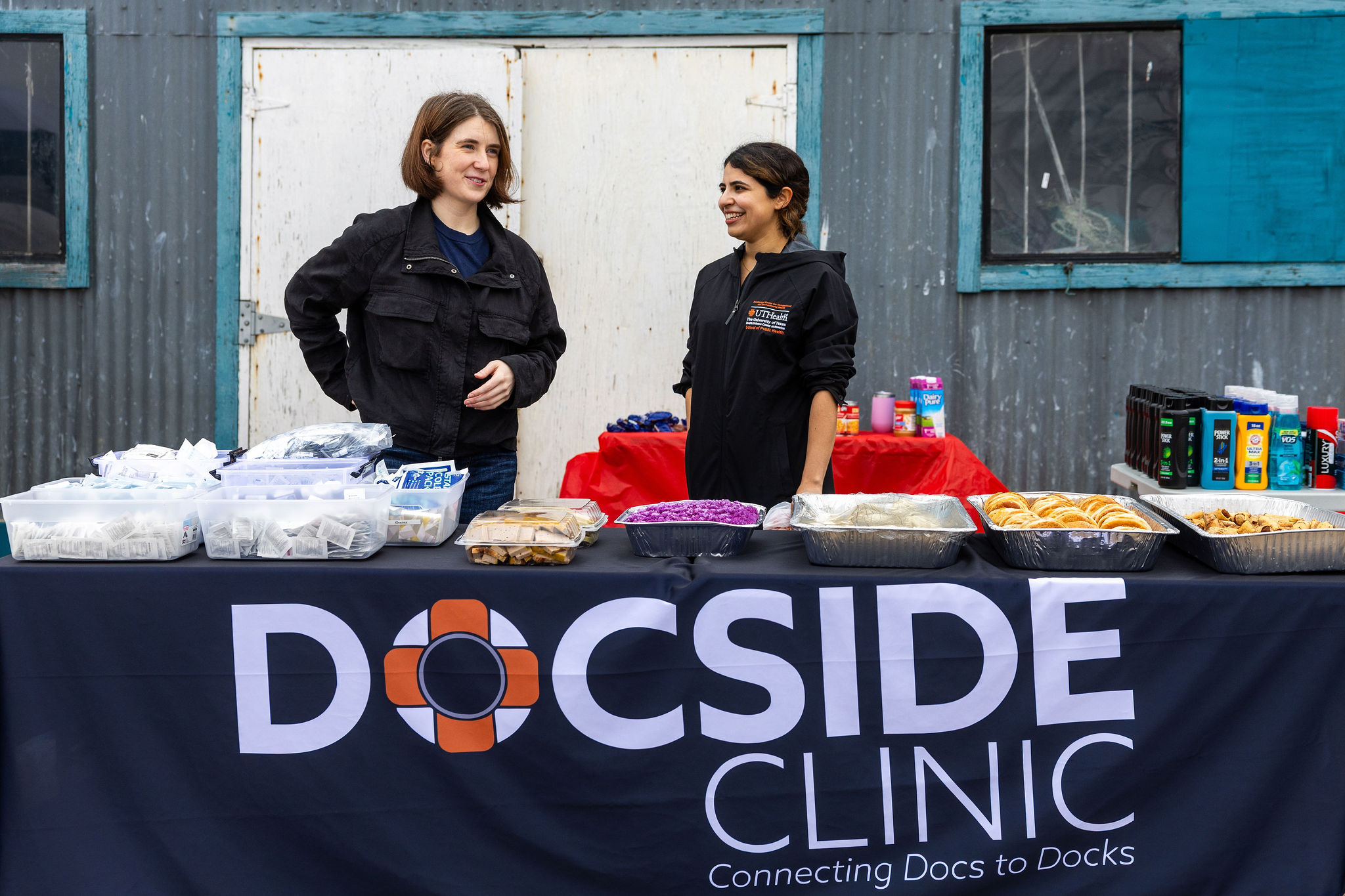
Safety Net Services
We provide fishermen and other dockworkers with safety net social services, including legal counseling, clothing, food, and hygienic items.
Student & Trainee Opportunities
Docside Clinic Scholar’s Program Photo Credit: Carl Zoch Photography
Through funding from the Texas Higher Education Coordinating Board’s Minority Health Research & Education Grant Program, we are offering a unique educational experience that brings students face-to-face with community-based public health practice (masters) and community-based participatory research (doctoral).
If you’re interested in applying or learning more, visit: https://sph.uth.edu/research/centers/swcoeh/academic-programs/Internships
Fishermen First Aid Photo Credit: Carl Zoch Photography
Through annual funding from medical student Osler Society projects, our team provides fishermen with first aid manuals and first aid kits in their native language.