

Can 10 Minutes Reduce Symptoms of Depression? A New Study Says Yes.
Published: March 5, 2026
Can 10 Minutes Reduce Symptoms of Depression? A New Study Says Yes.
Many people would assume that reducing symptoms of depression requires weeks of therapy, months of medication, or both. But what if a well-designed 10-minute program could make a real difference?
A new study published in Nature Human Behaviour suggests it can—and it features research from UTHealth Houston School of Public Health faculty from the Austin Location.
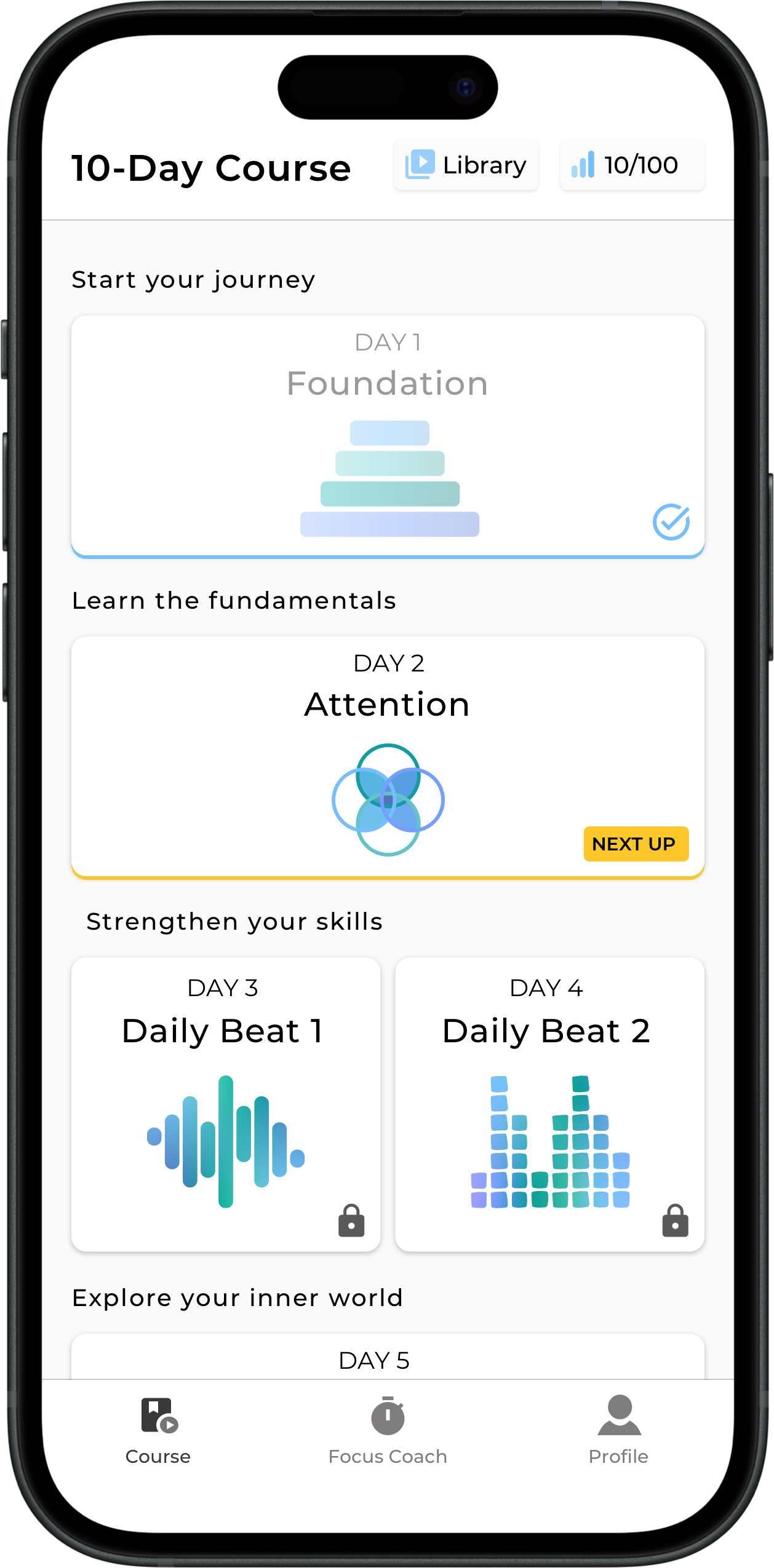
In the largest trial of single-session digital mental health interventions to date, researchers tested 12 brief programs among more than 7,500 U.S. adults experiencing elevated depressive symptoms. Only two of the 12 interventions significantly reduced depression at the four-week follow-up. One of them was an abbreviated version of Finding Focus, a program teaching mindful attention skills co-created by Dr. Michael Mrazek, Associate Professor of Health Promotion & Behavioral Science at UTHealth Houston School of Public Health in Austin and a faculty member of the Michael & Susan Dell Center for Healthy Living, and Dr. Alissa Mrazek at UT Austin.
The study, led by Dr. Benjamin Kaveladze, crowdsourced 66 candidate interventions from teams around the world and selected 11 for rigorous testing alongside an existing evidence-based comparison and a control condition. The abbreviated Finding Focus intervention helped participants recognize how their evaluation of an experience shapes how they feel, and then guided them in practicing a skill called re-evaluation: identifying a new perspective that feels true but leads to a better outcome.
Finding Focus was developed over nine years of iterative design and research, and its success in this trial highlights what careful, science-driven development can achieve even within a very brief format. At a time when cost, provider shortages, and stigma prevent millions of Americans from accessing mental health care, scalable digital tools like Finding Focus offer a promising way to reach people who might not otherwise receive support.
Finding Focus has already demonstrated benefits on symptoms of depression and anxiety among adolescents. This new study extends the evidence into adulthood, suggesting that the same skills may also support educators and other adults within K-12 school systems. Strengthening the mental health of both students and the adults who support them is a promising path toward healthier school communities.
How could 10 minutes produce effects that last weeks? One possibility is that the intervention doesn't just deliver a momentary experience—it teaches a skill. When participants learn to notice an unhelpful evaluation and practice replacing it with one that is equally true but more constructive, they acquire something they can continue applying on their own long after the session ends. A brief intervention that shifts how someone relates to their own thinking may set a different trajectory in motion.
Read the full study: Kaveladze et al. (2026) in Nature Human Behaviour


Discussion